The Changing Landscape of Due Diligence in the Age of AI
What the Shy Girl Controversy Reveals in the Age of AI
As someone who monitors the publishing market with the same fervor as people who closely watch the stock market, I had been excited to read Mia Ballard’s horror novel, Shy Girl. I had first heard about the book through TikTok just a few months after it had been self-published in February 2025, and I was thrilled when I heard that the book had garnered enough attention to be picked up for standard publication by Hachette, one of the Big Five publishing houses.
And then, just a month before Shy Girl was scheduled for release in the United States, the book’s publication was canceled. In the United Kingdom, where the novel had been released in November 2025, Shy Girl was discontinued.

According to The New York Times, which first reported the story, Shy Girl had been pulled from publication due to widespread online allegations that the author had “relied heavily” on artificial intelligence to write the book. A follow-up article published by the Times further reported that in early 2026, Max Spero—founder and CEO of Pangram, an AI detection program—“heard of the claims about ‘Shy Girl’ and decided to run a test of the full text,” which yielded results indicating that the novel was approximately 78 percent AI generated.
I was disappointed, to say the least. I had been looking forward to reading Shy Girl and championing an author whose self-published work had transformed her writing career into mainstream publishing success. And yet, Ballard’s response to the AI allegations gave me pause. In a statement to the Times, Ballard “denied using AI to write ‘Shy Girl,’ contending that an acquaintance she hired to edit the self-published version of the novel had used AI.” Ballard, who is pursuing legal action, could not elaborate on how AI had been used in the editing process, but she did state: “This controversy has changed my life in many ways and my mental health is at an all time low and my name is ruined for something I didn’t even personally do.”
Ballard’s statement stayed with me long after I read about the Shy Girl controversy, and I found myself ruminating about the larger implications of this case—particularly with respect to our work here at North Point. The publishing industry is not unique in the way it is being forced to grapple with AI and its advancing capabilities. The recent AI boom has already transformed so many aspects of how we work and live, and it’s becoming quite clear that the development of AI products and services is not slowing down any time soon. Yet the case of Shy Girl inspires two nuanced questions for me: How is the role of due diligence changing in the wake of AI’s evolution, and how long will it be until someone figures out how to exploit this evolution in some innovatively fraudulent way?
Wit, Charisma and AI Tools
The art of scammers and fraudsters is a tradition dating back thousands of years. Early cases of tax fraud were recorded in Ancient Egypt five thousand years ago, and cases of insurance fraud can be traced back over two thousand years to Ancient Greece. Whether or not we would like to acknowledge it, the truth remains: just as there will always be healers, teachers, and leaders among us, so, too, will there be scammers, fraudsters, and liars. Recent examples of famous fraudsters—think Bernie Madoff, Anna Delvey, Elizabeth Holmes—show that the art of fraud is not only alive and well, but also constantly evolving.
This is not to say that Mia Ballard and the Shy Girl controversy is equivalent to Bernie Madoff’s scheme or Anna Delvey’s tapestry of lies. Quite the opposite, in fact. We don’t yet know to what extent, if any, Ballard used AI to generate most of Shy Girl, nor do we know whether she was aware that someone else may have used AI while editing the novel. For the time being, this controversy is hovering in a gray area that the publishing industry, and the world itself, has not yet had to explore.
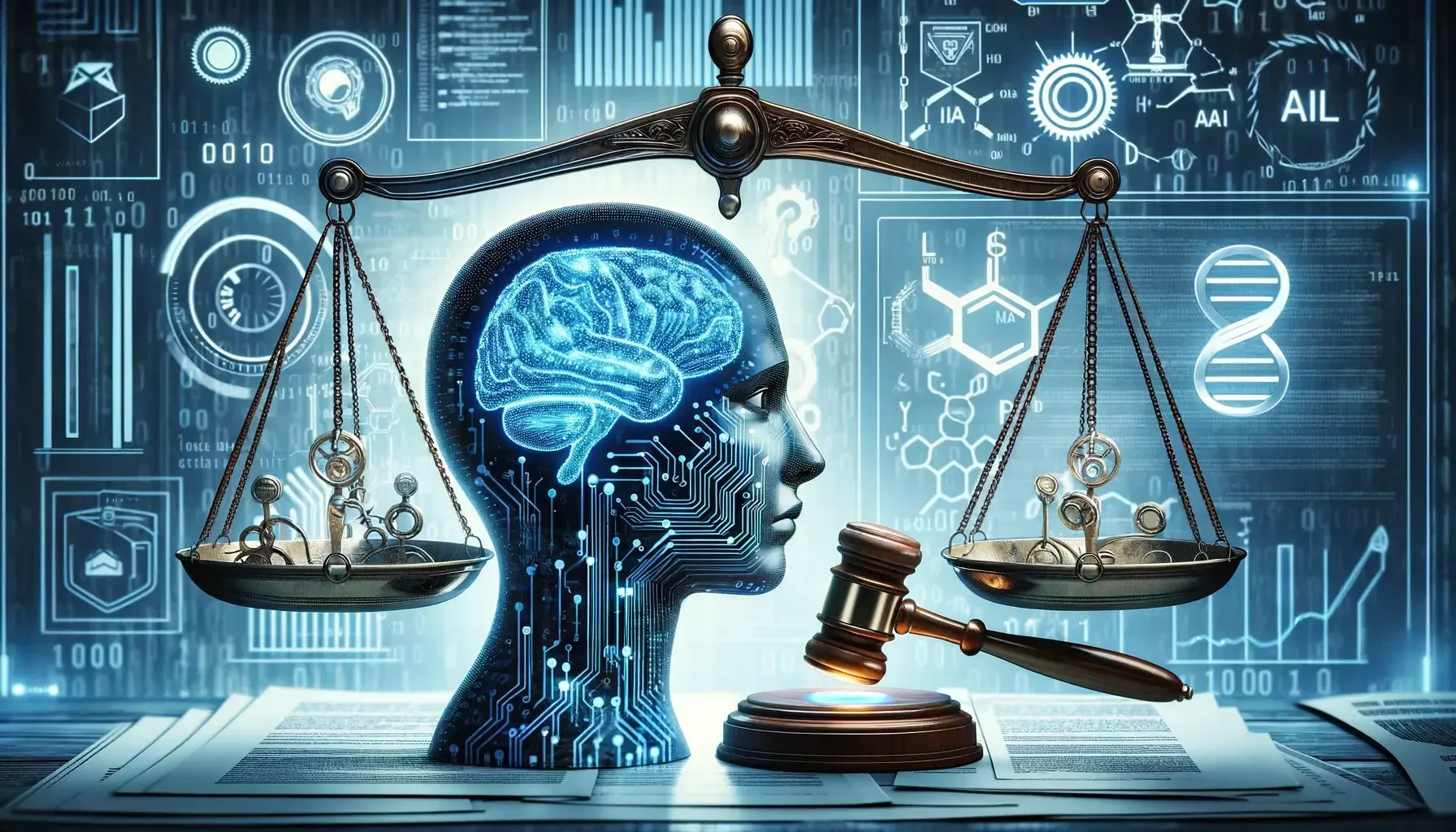
In the cases of Madoff, Delvey, or Holmes, we have a certainty of wrongdoing. More importantly, though, we have the certainty that these scams could have—and should have—been caught long before they were exposed. These famous fraudsters serve as both examples and reminders that comprehensive due diligence is more than just another step in a deal or partnership process. It is an absolute necessity, perhaps now more than ever. If the likes of Madoff, Delvey, and Holmes were able to execute their scams with nothing more than their wits, charisma, and audacity, then the question remains: what could the next famous fraudster accomplish with wit, charisma, audacity, and AI tools?
This question of “the next famous fraudster” is not a matter of if to me, but when. I’m certain that for every person using AI to improve the world around us, there is at least one person learning how AI can be exploited to improve the world of fraud. We know there will always be fraudsters among us, and we know that—for the most part—these fraudsters can be exposed simply by someone asking the right questions and pursuing the corresponding answers.
These questions and their answers are what make our work here at North Point worthwhile, engaging, and important. As a diverse due diligence firm, we strive to provide our clients with comprehensive research solutions that foster confident business partnerships and decisions. Our team of researchers is comprised of individuals with diverse backgrounds and skillsets, and we are unified in our purpose to ask questions, to find answers, to approach each project with both tenacious curiosity and generous skepticism. And while the case of Shy Girl still hovers in limbo, the implications loom over more than just the publishing industry.
Now more than ever, we must consider the vast array of tools available to fraudsters and malefactors. We must ask questions, we must pursue answers, and we must face the fact that the next great fraudster is not a matter of if, but when. And yet, despite the uncertainty of how AI will develop and what the world will look like in just a few short years, I find myself quite certain of one thing: the team at North Point will be here ready to ask questions, find answers, and provide our clients with the peace of mind that their deals and partnerships will not result in some fraudster making a fool of them.
About the Author
Jon Muñoz joined North Point as a Research Analyst in May of 2021. Over the last five years, Jon has contributed to the North Point Team in innumerable ways including but not limited to their contribution to improving the writing and editing process, mentoring junior analysts and most recently sharing their writing talent with our Insights Blog.
A fan of live music, Jon currently resides in Boston with their two cats, a personal library that is the envy of all of us book-lovers and is a key member of our research team. Jon brings a unique professional and educational background with the following degrees:
- Bachelor of Arts in English from Centenary University
- MFA in Creative Writing: Nonfiction from Emerson College