An Interview with Author Scott Ferson on Voter Research and Political Due Diligence
"When
Would You Talk to Voters?"
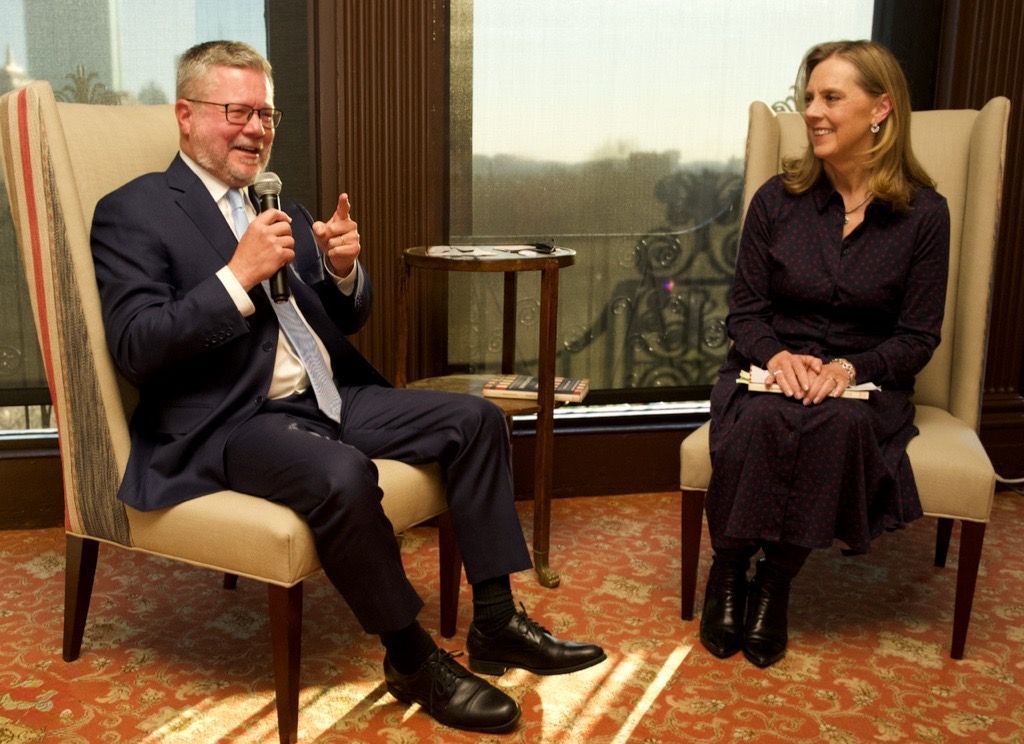
Scott Ferson is a former press secretary and Massachusetts Issues Director to the late Senator Edward M. Kennedy. He currently serves as the President and CEO of Liberty Square Group, a strategic communications and public affairs firm he founded in 1999, and runs The Blue Lab, a political incubator he founded in 2013 that trains young people in campaign strategy. He also teaches as an adjunct professor of political science at Stonehill College in Easton, Massachusetts.
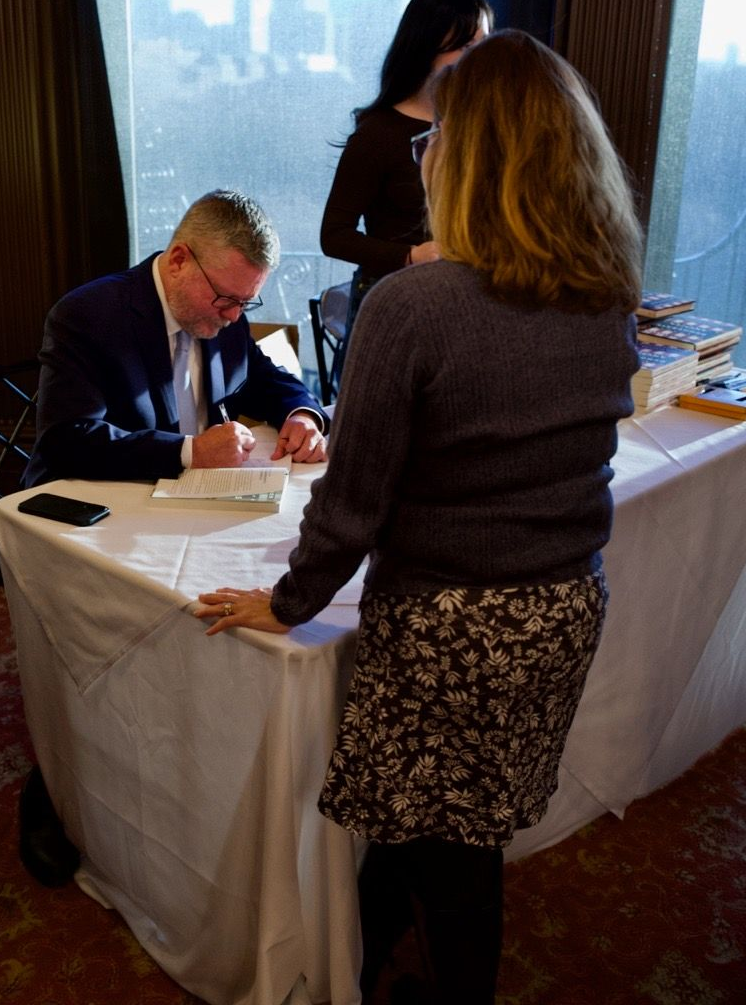
In April, Ferson released his book “How the Democrats Lost America: Making Sense of the 2024 Election and the Future of American Politics.” Based on thousands of interviews across the country over the last eight years, the book analyzes the outcome of the 2024 election, how it reflected a growing disconnect between political leaders and everyday voters, and how the party can find the way forward.
Ferson has been on the road for the last eight years. In his career as a Democratic strategist, public affairs expert, and as a professor, he has spent a lot of time talking to people. But, with a feeling of a growing disconnect between the people and their representatives raises a question that has long lingered within the world of political campaigns and elected officials: “when would you talk to voters?”
Ferson has always thought that people in the Northeast were more curious than others, often asking strangers about what they do, where they grew up, about their families. Instead, as he explored small towns in over 30 states over the last few years, he found that Northeasterners are just nosy, and that everyone else respectfully doesn’t like to pry into a stranger’s personal life. This doesn’t mean, however, that they don’t want to talk.
What is now his published work, the research started off as a project to go outside of the Massachusetts bubble and find out what issues voters are focused on throughout the rest of the country. Was it the economy? Was it affordability? What about gas prices? One thousand discussions later, Ferson learned that these political talking points are not at all the way the average voter speaks or thinks about their everyday life.
The American Public
Ferson has found in his conversations that people vote for change. They don’t find themselves in an “affordability” crisis, a word that those in Washington DC like to throw around, but rather they find that things cost too much, and they can’t afford those things. Sure, pollsters ask voters what issues are important to them. But, if you ask specific or leading questions, you will receive specific or confined answers.
When Ferson went on his “speaking tours” which started for his own curiosities, then eventually for a book, he did not start conversations with people by immediately jumping into politics, but rather asked people about themselves. In talking about their daily lives, you better understand a person’s role in society, what is important to them, and more specifically, what change is important to them. He recalled attending the Iowa Caucus in early 2016, sitting with Republican voters, someone got up and spoke in favor of everyone Republican candidate except: Donald Trump. However, when the votes were tallied, all were for Trump. At that time, people chose not to be outwardly supportive of the brash candidate, but voted for him because they knew he would bring change.
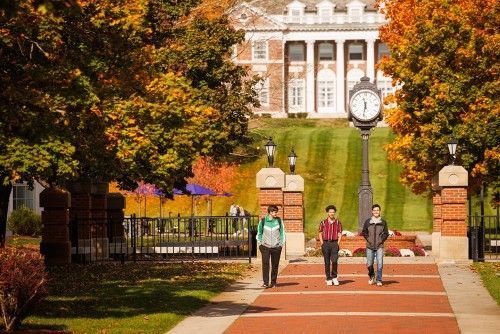
Voting Ages 18-24
Ferson has also been a professor at a small private Catholic college in Massachusetts for over a decade. In his class, he runs a mock election. The class splits to run two candidates, culminating to an election at the end of the semester. The campaigns must develop strategy and convince people on campus and outside of it to vote for their candidate on election day. Through all the years of running this election, Ferson has noticed changes within the students. When he first started teaching, the men in the class were the ones who self-selected to be the candidates. Women typically only ended up as the candidates when Ferson would tell the campaigns he would provide them with extra votes if they were to select a woman. Nowadays, the women are self-selecting.
He also noticed dramatic changes in how students consume information. As someone who likes to slip Massachusetts and other American history into casual conversation, let alone into lectures when he’s teaching, he’s noticed a rise in students immediately looking up whoever he mentions. While that could simply be indicative of the age gap between professor and student, it does speak to the broader shift in voting habits and political leanings of that age group due to the ways in which they consume media and news. Before, Ferson says, 18-24 years olds often voted the same. In the last election, women voted 60-40 for Kamala Harris while for men in that age range, it was 60-40 for Donald Trump. Republicans are speaking to men in ways that Democrats haven’t quite figured out. He points to the growing influence of podcasts, online creators, and other nontraditional media platforms, which have become increasingly important sources of information and engagement for younger audiences.
Reporters always call
Ferson has used North Point’s services for political campaigns. A lot of political research North Point provides could be dubbed “self-opposition” research through which we are looking into the political candidate that has hired us. When discussing the importance of due diligence research, Ferson states, "I don't want to get a phone call from a reporter I don't know the answer to."
Often, when someone has to tell their personal story over and over again as political candidates do, you can come to believe certain aspects of your own story as true, even if the reality of the facts say otherwise.
Ferson recalls one such instance representing a Vietnam Veteran, who in his story stated he was at the Battle of Khe Sanh. One day, a reporter called Ferson asking how the veteran could have been at the Battle of Khe Sanh, when at the time, he was only 12 years old. It wasn’t until sitting down with the veteran going line by line through his military history did Ferson realize that the veteran conflated other marines’ experiences with his own. Ultimately, people can become their own unreliable narrators without ill intentions. And, sometimes people lie willingly.
For Ferson, determining fact from fiction prior to the reporter call is critical, North Point's work is integral to both Ferson's team and for all of our clients; often arriving after a similar incident of trusting and not verifying information heard. Our research uncovers critical facts, verifies representations and ensures that narratives are grounded in reality before high-stakes decisions are made.
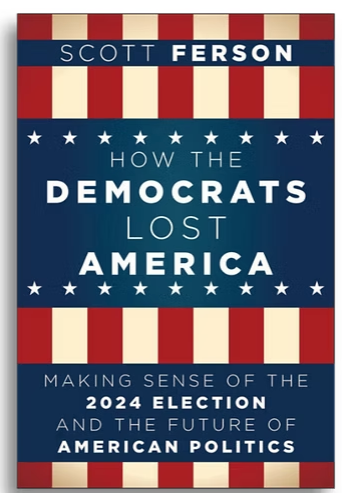
How the Democrats Lost America by Scott Ferson
Prior to interviewing Ferson, we read his book both out of curiosity about his findings and, of course, preparation. What we appreciated the most from reading his book is the effort to go out and talk to people and not rely on pundits, polls and theories. This is not a recrimination piece aimed at voters but rather an interesting snapshot of nearly 1,000 stories from fellow Americans discussing their hopes and challenges. Most are working- and middle-class voters with no fixed party loyalty, who, a generation ago, would likely have been Democrats by tradition, community or union ties. They simply want the American dream they were promised in their youth.
How the Democrats Lost America reads more as an immersive political ethnography than another strategic post-mortem. With that, it's light on suggestions for a concrete path forward for the Democratic party. Instead, the book's strength lies in its portrayal of day-to-day conversations, which provide insight on the emotional and cultural gap between party and working-class voters. If you're looking for a granular electoral analysis, it may feel thin.
If you're interested in seeing Scott on book tour, you can learn more at ScottFerson.com/booktour
About the Author
Sophie Renzi joined North Point Associates in January of 2023 is currently a Senior Research Analyst. Since joining our team, Sophie has been a fantastic contribution to our team in innumerable ways both in the office, representing North Point at conferences and out on the golf course with clients. Sophie is a member of the Association for Corporate Growth (ACG) Boston. She was selected to participate in the 2025 ACG Accelerator Program, an exclusive leadership development program focused on advancing the knowledge and networks of the next generation of M&A leaders. Always a delight to work with, Sophie is curious, rigorous, and enthusiastic in her approach to research, work, and life.
Sophie earned her Bachelor of Arts in Intelligence Studies with a Minor in Political Science and Psychology from Mercyhurst University.
Also, a special thanks to Cate Ferson for her contributions to this post as well as arranging the interview with Scott. Cate joined our team in August 2020 and recently moved on to pursue a new adventure. We wish Cate all the best and miss her contributions to our team.